Local SEO Checklist for West Virginia Small Businesses

If your business depends on customers in West Virginia, local SEO can make the difference between being found and being forgotten. Whether you serve customers in Morgantown, Fairmont, Bridgeport, Clarksburg, Charleston, Beckley, or other communities across the Mountain State, your online presence needs to send clear signals to Google about who you are, what you do, where you work, and why customers should trust you.
Local SEO isn’t one single task. It’s a collection of small, consistent improvements that help your business appear in Google Search, Google Maps, AI-powered search results, and other places where potential customers are looking for answers.
This checklist is designed to help West Virginia small business owners understand what to review, fix, and improve first.

Key Takeaways
Local SEO helps your business show up when nearby customers search for your products or services.
Your Google Business Profile, website, reviews, citations, and content all work together.
West Virginia businesses should use local signals naturally, including cities, counties, services, and customer needs.
Strong local SEO shouldn’t only improve rankings, it should help generate more calls, form submissions, visits, and qualified leads.
The best results come from building a clear foundation, then improving it over time.
What Is Local SEO?
Local SEO is the process of improving your online presence so your business can be found by people searching in your area. For example, someone might search for a contractor in Morgantown, a dentist in Charleston, a law firm in Wheeling, or a professional service provider in Clarksburg.
Google looks at many signals before deciding which businesses to show. These signals can include your Google Business Profile, website content, location information, reviews, links, business listings, service pages, and how helpful your content appears to be.
For West Virginia businesses, local SEO matters because many customers want to work with someone nearby, or at least someone who understands the region. A business in Morgantown may serve clients across Monongalia County, Marion County, Harrison County, Kanawha County and other parts of West Virginia, but Google needs clear information before it can connect that business with the right searches.
1. Claim and Optimize Your Google Business Profile
Your Google Business Profile is one of the most important parts of local SEO. It’s often what people see before they ever visit your website. It can appear in Google Maps, the local pack, branded search results, and mobile searches.
Start by making sure your profile is claimed, verified, and fully completed. Your business name, address, phone number, website, hours, services, and categories should all be accurate.
For example, if you’re a service business in Morgantown that also serves Fairmont, Bridgeport, Clarksburg, and nearby areas, your profile should make that clear without overloading it with city names.
Google Business Profile Checklist
Use your real business name.
Choose the most accurate primary category.
Add relevant secondary categories.
Make sure your phone number and website are correct.
Add complete business hours.
Write a clear business description.
Add services or products where appropriate.
Upload high-quality photos.
Keep your profile updated.
Respond to customer reviews.
Your Google Business Profile shouldn’t be treated like a one-time setup. It should be maintained as part of your ongoing local SEO strategy.
2. Make Sure Your Website Clearly Shows Where You Serve
Your website should make it easy for both visitors and Google to understand your service area. Many businesses are vague about location, which can weaken local search visibility.
If you serve Morgantown, Fairmont, Bridgeport, Clarksburg, and the surrounding areas, say so clearly. If you serve all of West Virginia, explain that too. The key is to use location language naturally. A simple example might be:
“Our company serves small businesses in Morgantown, Fairmont, Bridgeport, Clarksburg, and communities throughout North Central West Virginia.”
That’s much better than stuffing the same phrase over and over.
Website Location Checklist
Mention your primary city on your homepage.
Include your service area on your contact page.
Add nearby cities where they make sense.
Use county or regional terms when helpful.
Add location details to service pages.
Make sure your footer has accurate business information.
Keep your name, address, and phone number consistent.
For many West Virginia businesses, regional wording can be helpful. Phrases like North Central West Virginia, Monongalia County, Marion County, Harrison County, and North Central WV can help clarify where your business operates.
3. Create Strong Service Pages
One of the biggest local SEO mistakes is trying to rank one general page for every service. If your business offers several services, each important service should usually have its own page.
For example, a digital marketing agency might have separate pages for SEO services, local SEO, website design, lead generation, brand strategy, and website management. A contractor might have separate pages for roofing, siding, decks, remodeling, and repairs. This helps Google understand what each page is about. It also helps potential customers find the exact service they need.
Service Page Checklist
Each service page should include:
A clear page title.
A direct explanation of the service.
Who the service is for.
Problems the service solves.
Local references where appropriate.
Trust signals, such as experience, reviews, or examples.
A clear call to action.
Links to related services or helpful blog posts.
For example, a page about local SEO services shouldn’t just say “we help with SEO.” It should explain how local SEO helps businesses show up in Google Maps, improve Google Business Profile visibility, earn more reviews, strengthen citations, and drive more local leads.
4. Use Local Keywords Without Sounding Robotic
Local keywords are important, but they need to be used naturally. Google’s much better than it used to be at understanding context. You don’t need to repeat the same phrase in every paragraph. A good local keyword strategy includes your service, your location, and related business problems.
For example:
SEO services in West Virginia
Local SEO for Morgantown businesses
Google Business Profile optimization in Morgantown
Lead generation for local service businesses
The best approach is to use a mix of service terms, local terms, and problem-based language.
Local Keyword Checklist
Use your main keyword in the page title when it fits.
Use your location in the introduction.
Add related cities naturally.
Include service-specific phrases.
Use common customer language.
Avoid repeating the same keyword too often.
Write for people first, then refine for Google.
A post titled “Local SEO Checklist for West Virginia Small Businesses” can naturally include Morgantown, Fairmont, Bridgeport, Clarksburg, Buckhannon, Kingwood, and other nearby areas without making the article feel forced.
5. Build Local Trust with Reviews
Reviews are a major part of local SEO and customer decision-making. When someone compares two businesses in Google Maps, reviews often influence who gets the call.
For West Virginia businesses, reviews can be especially powerful because many local customers still rely heavily on trust, reputation, and word of mouth. A strong review profile gives your business more credibility before someone ever speaks with you.
Review Checklist
Ask happy customers for reviews.
Make the review process simple.
Send a direct Google review link.
Respond to every review.
Mention specifics when replying.
Don’t copy and paste the same response every time.
Never offer incentives for fake or misleading reviews.
Add selected reviews to your website.
A good review response doesn’t need to be long. It should sound human, thank the customer, and reinforce what your business does. For example:
“Thank you for the kind words. We’re glad we could help your Morgantown business improve its website and make the process easier.”
That type of response helps both potential customers and Google understand your work.
6. Clean Up Your Citations and Directory Listings
Citations are online mentions of your business name, address, phone number, and website. These can appear on directories, chamber websites, industry sites, maps platforms, social profiles, and local business listings.
For local SEO, consistency matters. If your business is listed one way on your website, another way on your Google Business Profile, and another way on directories, Google may have less confidence in your information.
Citation Checklist
Keep your business name consistent.
Use the same address format when possible.
Use the same primary phone number.
Make sure your website URL is correct.
Update old listings.
Remove or correct duplicate listings.
Add your business to relevant local directories.
Check chamber of commerce and local business listings.
Use industry-specific directories when they make sense.
For a Morgantown business, this could include local organizations, regional business directories, West Virginia business listings, industry associations, and other trusted sources. The goal isn’t to be listed everywhere. The goal is to be listed accurately in the places that matter.
7. Improve Your On-Page SEO
On-page SEO refers to the content and structure of each page on your website. This includes your title tags, meta descriptions, headings, image alt text, internal links, and page copy. For local SEO, your pages should make the topic and location clear.
On-Page SEO Checklist
Use one clear H1 on each page.
Write helpful H2s and H3s.
Include your primary keyword naturally.
Add local terms where they fit.
Write clear title tags.
Write useful meta descriptions.
Use descriptive image alt text.
Link to related pages.
Make sure each page has a clear purpose.
For example, a page about SEO services shouldn’t just say “we help with SEO.” It should explain how SEO helps West Virginia businesses get found in Google, improve website visibility, support lead generation, and compete more effectively online.
8. Create Helpful Local Content
Blog posts can support your local SEO by answering the questions your customers are already asking before they contact you. The mistake many businesses make is writing only about themselves, their services, or their company news. Helpful content should focus on the problems your customers are trying to solve. For example, a home service company in Morgantown, Fairmont, Bridgeport, or Clarksburg could write about:
How to know when your roof needs repaired or replaced
What to check before hiring a local contractor
Why your basement keeps getting water after heavy rain
How to prepare your home for winter in West Virginia
What causes high energy bills in older homes
How to choose between repairing or replacing equipment
Questions to ask before starting a home improvement project
This type of content helps establish expertise. It also gives you more opportunities to rank for related searches.
Local Content Checklist
Write about real customer questions.
Include local examples.
Mention nearby cities naturally.
Connect the topic to business outcomes.
Link to relevant service pages.
Link to related blog posts.
Keep the content useful, not sales-heavy.
Update older posts when information changes.
A good blog post should make a business owner feel understood. If they read it and think, “That sounds exactly like what we’re dealing with,” you’re on the right track.
9. Strengthen Your Internal Links
Internal links are links from one page on your website to another. They help visitors find related information, and they help Google understand how your pages connect.
For example, a blog post about Google Business Profile optimization could link to your local SEO services page. A post about website leads could link to your website design and lead generation pages.
Internal Linking Checklist
Link from blog posts to service pages.
Link from service pages to related blog posts.
Use clear anchor text.
Avoid using “click here” too often.
Link to your most important pages more often.
Add links where they help the reader.
Review older posts for new linking opportunities.
Good internal linking helps turn your website into a connected resource instead of a collection of disconnected pages.
10. Make Sure Your Website Works Well on Mobile
Many local searches happen on mobile devices. If someone searches for your business from a phone and your site is slow, confusing, or hard to use, you may lose the lead. This matters for restaurants, contractors, medical offices, professional services, retail stores, and almost any local business.
Mobile SEO Checklist
Make sure your site loads quickly.
Use readable font sizes.
Keep buttons easy to tap.
Make phone numbers clickable.
Keep forms short.
Avoid cluttered mobile layouts.
Make your main call to action easy to find.
Test important pages on your phone.
A mobile visitor shouldn’t have to pinch, zoom, hunt, or guess. If they’re ready to call, request a quote, book an appointment, or ask a question, your website should make that easy.
11. Track Calls, Forms, and Leads
Rankings are useful, but they’re not the final goal. The real question is whether your SEO is helping your business get more calls, form submissions, appointments, visits, and qualified leads. A business could rank higher and still not get enough customers if the website is unclear, the offer is weak, or the calls to action are hard to find.
Tracking Checklist
Set up Google Analytics.
Set up Google Search Console.
Track phone number clicks.
Track form submissions.
Track email clicks.
Review Google Business Profile insights.
Watch which pages bring in visitors.
Watch which pages generate leads.
Review keyword and ranking trends.
Compare traffic with actual business results.
For a West Virginia small business, this can help answer an important question: “Is our marketing actually working, or are we just looking at numbers?”
12. Prepare for AI Search
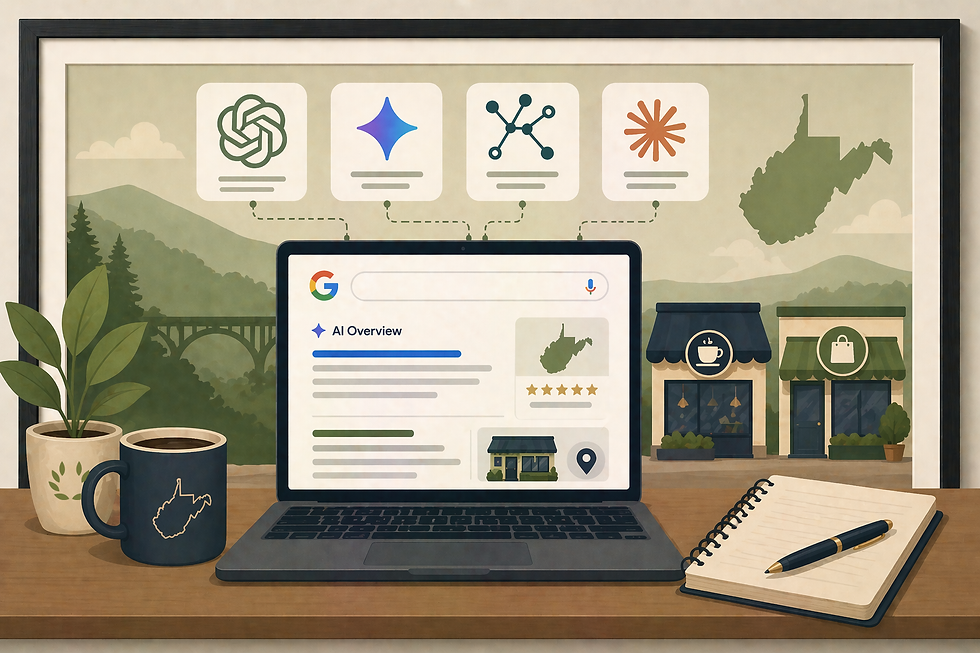
Search is changing. Google AI Overviews, ChatGPT, Perplexity, Gemini, and other AI-powered tools are changing how people find information. This doesn’t mean traditional SEO is dead. It means your content needs to be clearer, more helpful, and easier for search systems to understand.
AI search tools often look for direct answers, clear expertise, trustworthy information, and well-structured content.
AI Search Readiness Checklist
Explain your services clearly.
Answer common customer questions.
Add FAQs to important pages.
Use structured headings.
Keep your content accurate.
Show real expertise.
Include location details.
Build a strong brand presence.
Earn reviews and mentions.
Keep your website current.
For West Virginia businesses, AI search creates both a challenge and an opportunity. Many competitors are still behind. A business that clearly explains what it does, who it serves, and why it’s trustworthy can build an advantage early.
13. Keep Your Local SEO Updated
Local SEO isn’t something you finish once. Your business changes. Google changes. Competitors change. Customer behavior changes. That means your local SEO should be reviewed regularly.
Ongoing SEO Checklist
Review your Google Business Profile monthly.
Add new photos when appropriate.
Ask for new reviews consistently.
Update service pages.
Fix outdated website content.
Check for broken links.
Review rankings and traffic.
Refresh older blog posts.
Add new local content.
Watch what competitors are doing.
Even small updates can help keep your website and local presence active, accurate, and competitive.
Common Local SEO Mistakes West Virginia Businesses Should Avoid
Many local businesses don’t fail at SEO because they ignore it completely. They struggle because the foundation is incomplete. Common mistakes include:
Having a thin or outdated website.
Using vague service descriptions.
Ignoring the Google Business Profile.
Not asking for reviews.
Having inconsistent business listings.
Creating service pages with very little content.
Forgetting to mention local service areas.
Publishing blog posts with no internal links.
Tracking traffic but not leads.
Treating SEO as a one-time project.
For businesses, fixing these issues can create a stronger local search foundation.
How to Prioritize This Checklist
If this feels like a lot, start with the pieces that have the biggest impact.
First, make sure your Google Business Profile is complete and accurate. Second, review your homepage and service pages to make sure they clearly explain what you do and where you work. Third, clean up your citations and start asking for reviews. Fourth, create helpful content that answers real customer questions.
You don’t need to fix everything in one day. You need a clear plan and consistent progress.
Final Thoughts
Local SEO helps West Virginia small businesses become easier to find, easier to understand, and easier to trust. It’s not just about ranking for a few keywords. It’s about building a stronger online presence that supports real business growth.
If your business serves customers in Morgantown, Fairmont, Bridgeport, Clarksburg, Charleston, Beckley, or other communities across West Virginia, local SEO can help you show up in the moments that matter.
The businesses that win in local search usually aren’t the ones doing one big thing perfectly. They’re the ones doing the right small things consistently.
That means a clear website, a strong Google Business Profile, accurate listings, helpful content, good reviews, local trust signals, and a plan for turning visibility into leads.
When Expert Guidance Helps
A boutique SEO agency like Relaunch Digital helps businesses align their website, messaging, and search visibility so their online presence functions as a cohesive inbound marketing system. This includes search engine optimization, UX web design, lead generation, website management, brand strategy/clarity, and digital marketing consulting. When these elements are aligned, marketing becomes more efficient and produces stronger long-term results.